Build to Learn™
Use working software to discover, test, and align.
Reality Driven Development™
AI did not just make coding faster. It changed the economics of uncertainty.
RDD helps organizations reduce uncertainty before they engineer software by using working software to learn, align, govern, and then deliver with discipline.
The problem
Organizations often approve scope, estimate delivery, and commit engineering capacity before users and stakeholders have experienced the future solution.
The core idea
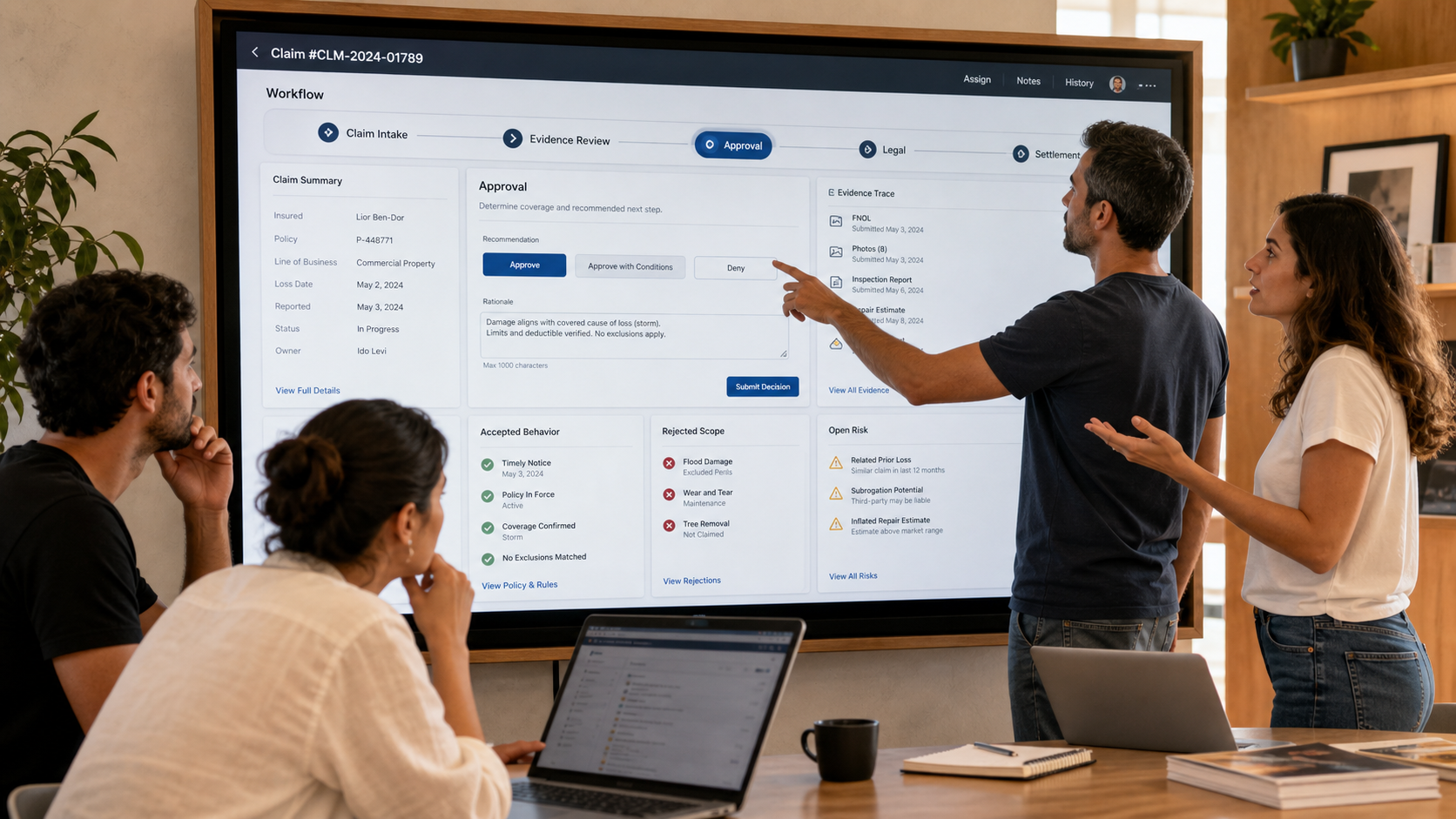
Working software exposes what documents often hide: unclear rules, process gaps, user confusion, missing data, integration assumptions, stakeholder disagreement, and operational constraints.
RDD treats these discoveries as progress. The goal is to surface ambiguity early, reduce Intent Debt™, and enter delivery with stronger certainty.
Operating model
Clarify the business change, user context, constraints, and decision questions before making delivery promises.
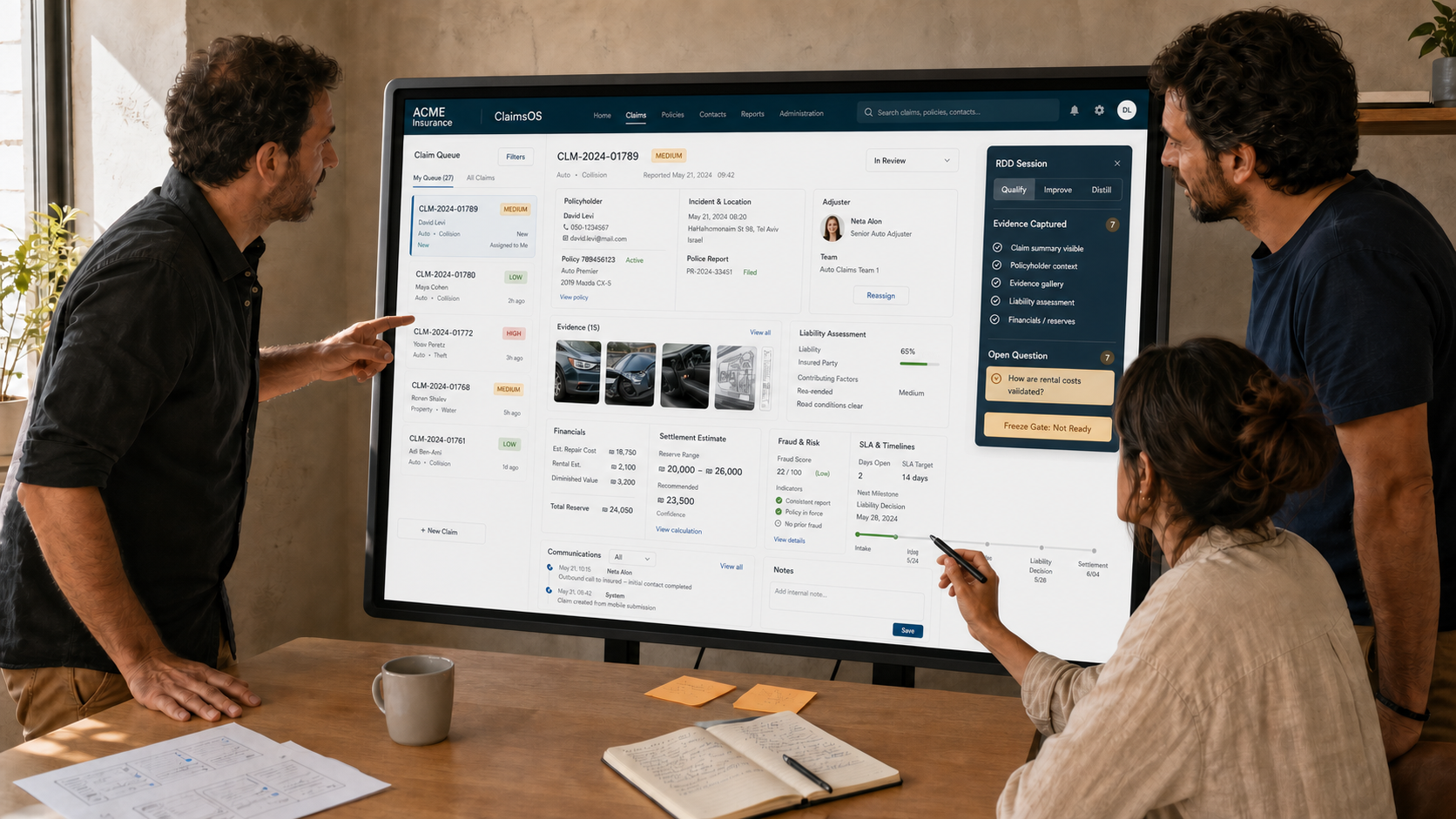
Create working realities that make abstract intent visible enough to test, challenge, and refine.
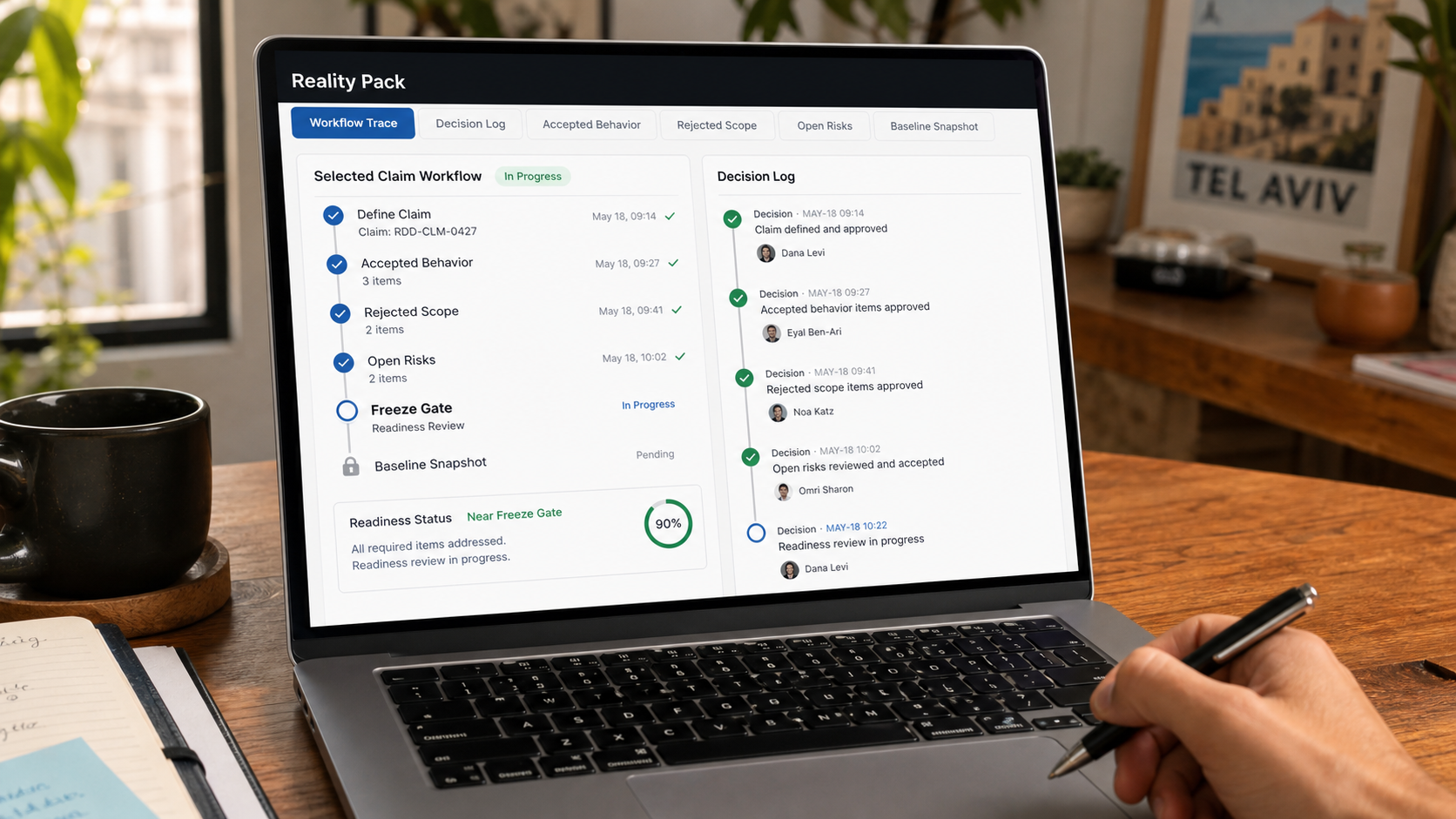
Run structured cycles of experiencing, learning, and deciding with stakeholders and users.
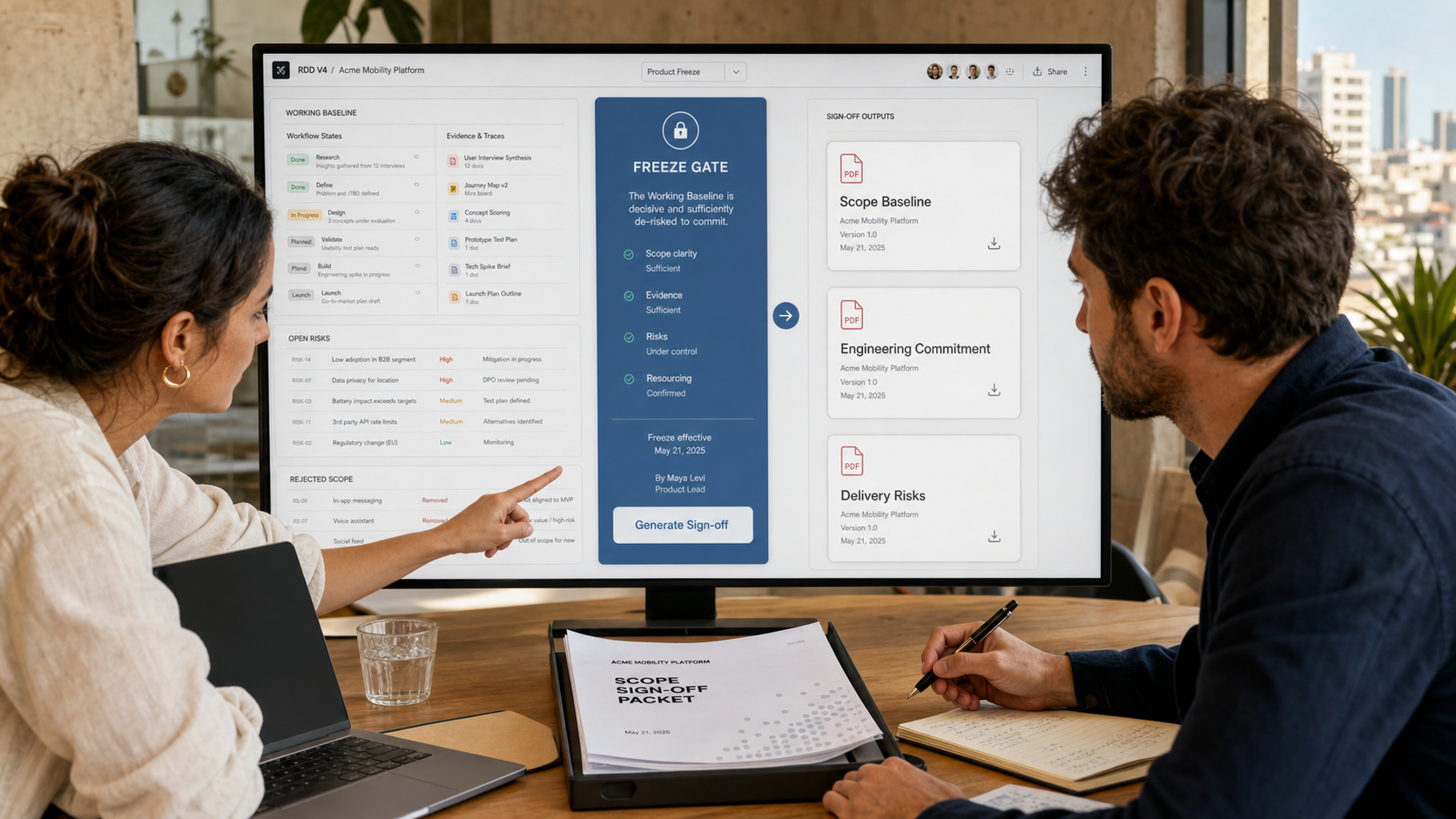
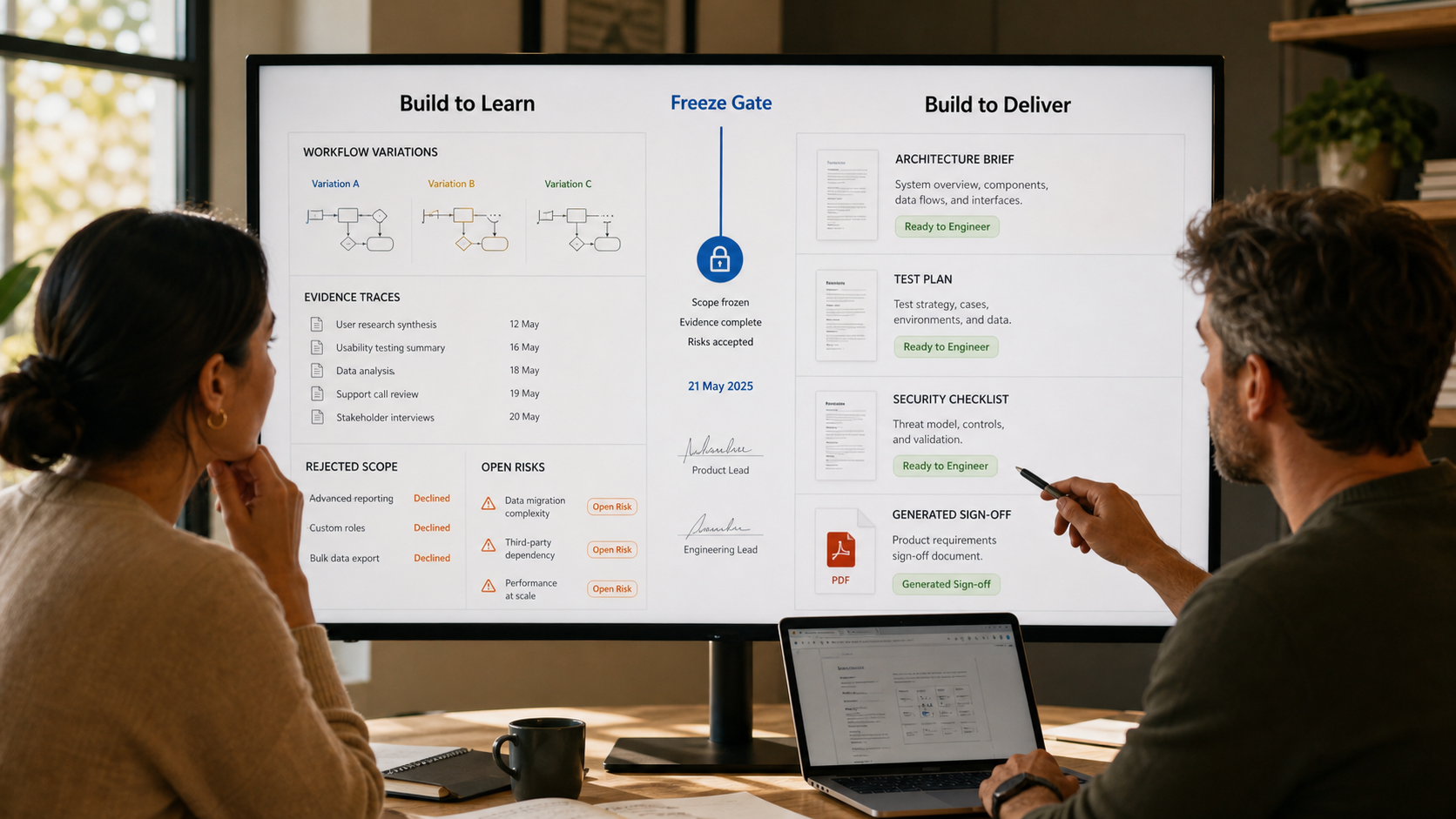
Convert validated learning into a governed delivery commitment with clearer scope and artifacts.
Move into disciplined engineering with architecture, quality, security, delivery practice, and ownership.
Turn validated intent into secure, scalable, maintainable software ready for real operation.
Key concepts
Use working software to discover, test, and align.
A structured cycle of building, experiencing, learning, and deciding.
The ambiguity that silently creates rework later.
The governance point where learning becomes delivery commitment.
Production engineering with architecture, quality, security, and discipline.
Turning validated intent into secure, scalable, maintainable software.
Discipline, not theater
RDD uses AI-assisted creation, but it does not confuse speed with readiness. It gives product, design, architecture, QA, DevOps, security, and governance better inputs.
Governed learning through working software.
Structured discovery with reusable intent artifacts.
Better validated inputs for architecture.
Earlier certainty and reduced delivery risk.
Why it matters
Built for complexity
Stakeholders need to see and feel the experience.
AI behavior must be tested in context.
Hidden complexity must be exposed early.
Real workflows often differ from documented processes.
Governance and stakeholder alignment are critical.
Adoption depends on clarity and trust.
Coming soon
Reality Driven Development™ is the first public operating model in a broader Reality Driven body of work. Reality Driven Engineering™ will be introduced later as the broader discipline.
Early access
Receive the RDD Manifesto, doctrine updates, playbook previews, and workshop announcements.